Antibiotics
What are antibiotics?
Antibiotics are medicines used to treat infections caused by bacteria. They work by killing bacteria or stopping them from growing, so your immune system can clear the infection. Antibiotics do not work for viruses like colds, flu, most coughs or Covid-19.[1][2][3]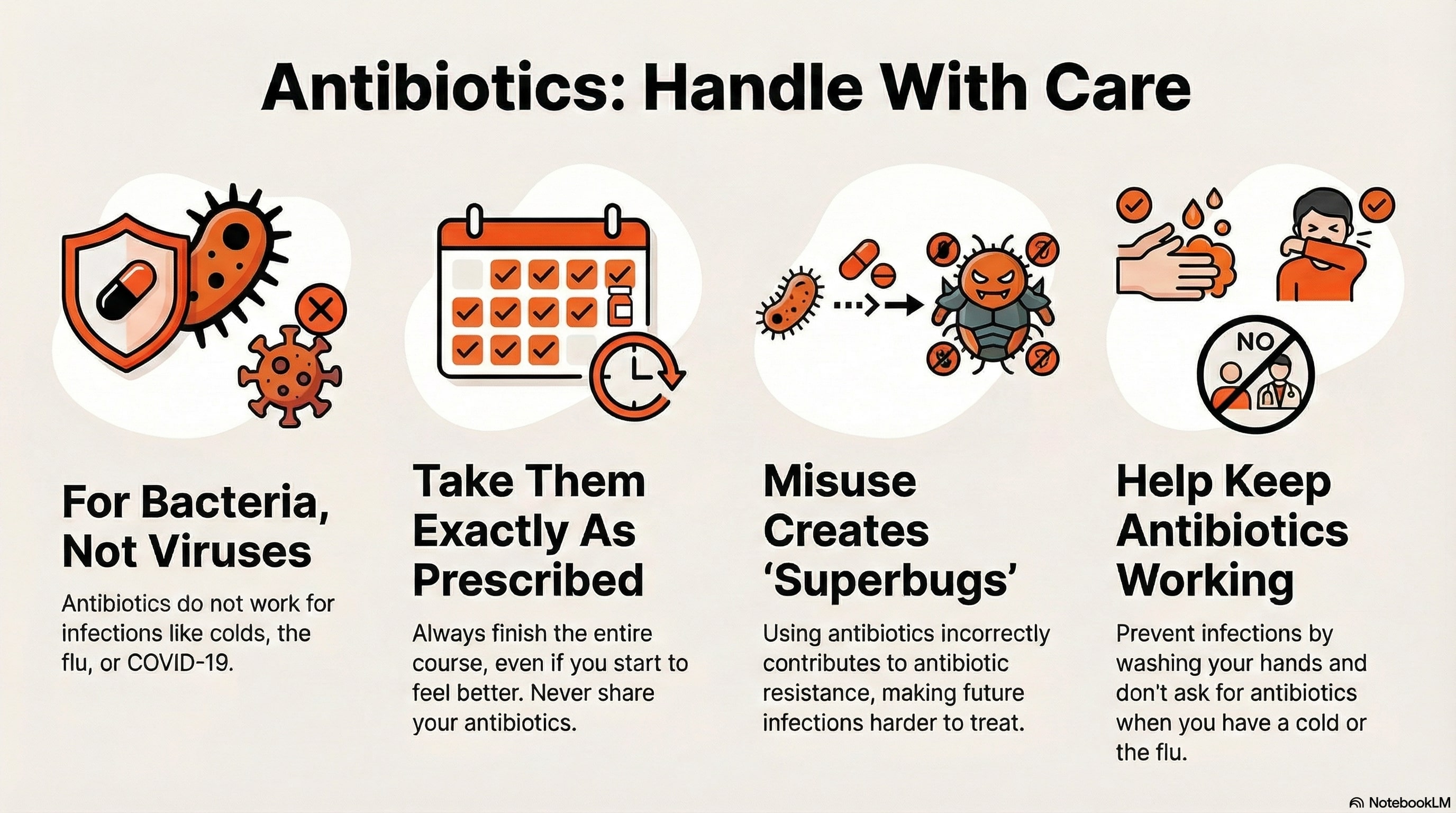
Video Overview: Understanding Antibiotics
Our explainer breaks down the essential science behind antibiotics, offering practical advice on safe usage, side effects, and the critical steps we must all take to combat antibiotic resistance.
Key reasons why antibiotics matter
When antibiotics are used in the right way they can be life saving. They help treat illnesses like pneumonia, urinary tract infections (UTIs), skin infections and some stomach or bowel infections.[1][3]
How antibiotics work
Think of bacteria as tiny germs that can multiply fast. Antibiotics target parts of bacteria that humans do not have, such as their cell walls or the way they make proteins. This means antibiotics can harm bacteria without harming you. Different antibiotics work in different ways, and a doctor or prescriber chooses one that fits your infection.[3]
Common types of antibiotics
There are many groups (also called “classes”) of antibiotics. Some common ones you may hear about in the UK include:
- Penicillins (for example amoxicillin, flucloxacillin)
- Macrolides (for example erythromycin, clarithromycin)
- Tetracyclines (for example doxycycline)
- Cephalosporins (for example cefalexin)
Each works best against certain bacteria, so the “right” antibiotic depends on the type and place of infection.[3]
How to take antibiotics safely
Using antibiotics properly helps you get better and keeps them working for everyone.
Follow the instructions
- Take the dose at the times written on the label.
- Finish the course unless a healthcare professional tells you to stop.
- Do not save antibiotics for later or share them with someone else.
Even if you feel better, some bacteria may still be there. Stopping too soon can let them grow again.[1][4]
Tell your prescriber about allergies and other medicines
Some people are allergic to certain antibiotics. Others may need a different choice because of pregnancy, breastfeeding or other medicines they take. Always tell your prescriber your full medical history.[1][5]
Possible side effects
Like all medicines, antibiotics can cause side effects, although many people have none. Common ones include:
- Feeling sick or diarrhoea
- Stomach pain or bloating
- Thrush (a yeast infection)
- Skin rash
Seek urgent medical help if you get signs of a serious allergy, such as swelling of the face or trouble breathing.[1]
Antibiotics and gut health
Antibiotics can affect “good” bacteria in your gut as well as the harmful ones. This is why some people notice tummy upset during or after treatment. Eating a balanced diet with fibre rich foods (like fruit, veg, beans and wholegrains) can support recovery. Some people choose yoghurt or other fermented foods for comfort, but these are not a replacement for medical advice.[1]
Asess the state of your microbiome with Vivere's ai-powered gut test.
Antibiotic resistance (why overuse is a problem)
Antibiotic resistance happens when bacteria learn to survive antibiotics. Over time this can make some infections harder to treat. Resistance is made worse when antibiotics are used when they are not needed, or not taken correctly.[6][7][2]
Health organisations are very concerned about resistance worldwide, including rising numbers of antibiotic resistant infections. This is why campaigns like “Keep Antibiotics Working” encourage careful use.[7][8][9]
How you can help keep antibiotics working
- Do not ask for antibiotics for colds or flu.
- Take antibiotics exactly as prescribed if you do need them.
- Return leftover antibiotics to a pharmacy for safe disposal.
- Help prevent infections by washing hands well and keeping vaccinations up to date.
Small actions like these reduce the spread of resistant bacteria.[7][4]
When to seek medical advice
Contact a healthcare professional if:
- Your symptoms are getting worse rather than better after starting antibiotics.
- You have severe diarrhoea, blood in your poo or signs of dehydration.
- You think you are having an allergic reaction.
- You are unsure how to take your medicine.
Never change your dose or stop a course without medical advice.[1]
Nutritionist's Corner: Final Thoughts
“Antibiotics are important medicines for bacterial infections, but they are not meant for viruses. Taking them exactly as prescribed protects your health and helps slow antibiotic resistance. While you are on antibiotics, focus on gentle, nourishing meals and plenty of fluids. After treatment, a varied diet with fibre rich plants can support your gut as it settles.”
- Yusra Serdaroglu Aydin, MSc RD
Sources:
[1] NHS. “Antibiotics.” NHS Medicines A–Z. (nhs.uk)
[2] Royal Berkshire NHS Foundation Trust. “Antibiotics” patient leaflet (PDF), June 2023. (Royal Berkshire NHS Foundation Trust)
[3] World Health Organization (WHO). “WHO updates list of drug-resistant bacteria most threatening to human health.” News release, 17 May 2024. (World Health Organization)
[4] Oxford University Hospitals NHS Foundation Trust. “Advice about antibiotics” patient leaflet. (Oxford University Hospitals)
[5] UK Health Security Agency (UKHSA). “UKHSA launches campaign to tackle misconceptions on antibiotics.” GOV.UK news story, 7 April 2025. (GOV.UK)
[6] World Health Organization (WHO). “Antimicrobial resistance.” Fact sheet. (World Health Organization)
[7] NHS England. “Antimicrobial resistance (AMR).” (NHS England)
[8] NHS Shropshire, Telford and Wrekin. “Keep Antibiotics Working.” Campaign page, updated 25 June 2025. (NHS Shropshire, Telford and Wrekin)
[9] World Health Organization (WHO). “WHO warns of widespread resistance to common antibiotics worldwide.” News release, 13 October 2025. (World Health Organization)
Author

Yusra Serdaroglu Aydin, MSc RD
Head of Nutrition and Registered Dietitian
Yusra is a registered dietitian with a multidisciplinary background in nutrition, food engineering, and culinary arts. During her education, her curio...